Nigeria currently operates within a financial paradox that would paralyze most emerging markets. We are navigating a staggering 20-million-unit housing deficit while the Central Bank of Nigeria (CBN) maintains a Monetary Policy Rate (MPR) at a 27% ceiling. For developers and investors, the traditional debt-heavy model has moved beyond expensive – it has become a structural inhibitor to capital formation.
However, as we look toward the 2026 economic horizon, a strategic pivot is visible. The PWC 2026 Outlook suggests we are moving from a period of “crushing” rates toward a “cautious easing stance.” In this environment, the convergence of Islamic Finance and PropTech is no longer a niche alternative; it is the essential scaffold for the next cycle of Nigerian real estate.
Despite the high-interest-rate environment that defined 2025, the Nigerian real estate sector has demonstrated remarkable “stickiness.” While overall GDP growth eased from 4.23% in Q2 2025 to 3.98% in Q3, the real estate sector maintained its ground as a fundamental pillar.
Traditional credit markets are currently stagnant. While credit to the government fell sharply in 2025, credit to the private sector remained almost flat, moving marginally from ₦74.07 trillion to ₦74.41 trillion. With borrowing costs at 27%, traditional debt creates significant refinancing risk and suppresses credit demand.
The strategic imperative for 2026 lies in the flattening yield curve. The PWC Outlook notes that yields across major maturities have started to decline and converge below the MPR.
“The yield curve flattened as 2-year, 5-year and 10-year yields converged below the MPR… Yields are projected to fall further in 2026, supported by lower inflation expectations and reduced term premia.”
As traditional bond yields drop, the equity-sharing and asset-backed models of Islamic Finance become exponentially more attractive. When “risk-off sentiment” dominates, the profit-sharing nature of Islamic instruments offers a superior yield-play that bypasses the “MPR Trap” entirely.
Technological dynamics are solving the “affordability pressure” through a combination of digital transparency and infrastructure. The Nigeria Tax Act 2025 and the transition from the FIRS to the Nigeria Revenue Service (NRS) are key catalysts here. This move toward a unified, digital-first tax system—including the mandatory Tax Identification Number (TIN) for all bank accounts—provides the transparency required for blockchain-secured transactions and tokenization.
For the 2026 strategist, tokenization isn’t just a trend; it’s the mechanism that allows the diaspora to participate in the Nigerian market with institutional-grade security
Institutional appetite for Islamic-aligned development is accelerating. High-profile capital flows indicate that global “Smart Money” is betting on Nigerian infrastructure through transparent, asset-backed principles.
While the 20-million-unit housing deficit is a social challenge, for the disciplined investor, it is a massive market opportunity. The Revised National Urban Development Policy (2025–2035) provides the regulatory framework to support coordinated infrastructure delivery.
The 2026 budget framework allocates ₦26.08 trillion to capital expenditure, signaling a clear policy intent to rebalance spending toward productive investment. Yahshud is uniquely positioned to fill the gap in the affordable housing segment, which the PWC report identifies as a high-growth area where “demand for housing… is expected to remain elevated.”
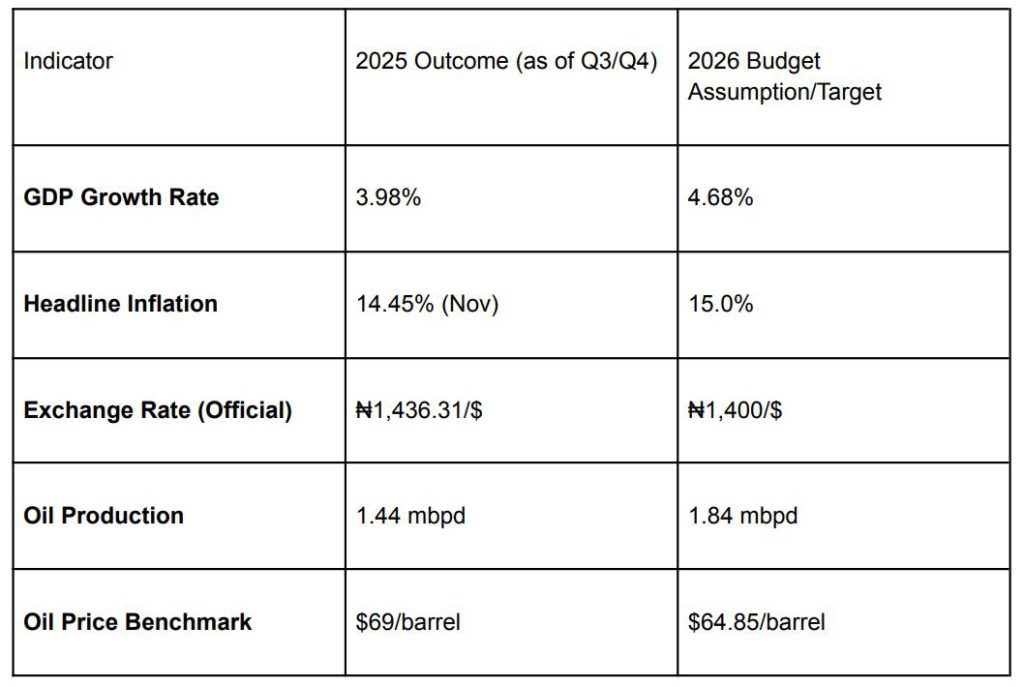
The shift from debt-heavy models to asset-backed Islamic models is supported by a stabilizing
macroeconomic floor. The following table highlights the pivot expected in the coming fiscal year:
Note: While 15% inflation is the 2026 target, it reflects a successful disinflationary trend from the 30% + peaks of the previous year.
As we transition into 2026, the era of traditional interest-bearing debt is being challenged by the agility of asset-backed models. Success in this landscape favors those who can utilize “fiscal buffers” and “tech-enabled” platforms to bypass interest rate volatility.
The strategy is clear: hedge with resilient bricks and mortar, leverage PropTech for transparency, and follow the institutional lead of the IsDB.
In a market where the cost of borrowing has hit a 27% ceiling, is the future of Nigerian real estate still found in a bank, or is it found in the convergence of faith, finance, and technology?